How Often to Replace Water Filters at Home
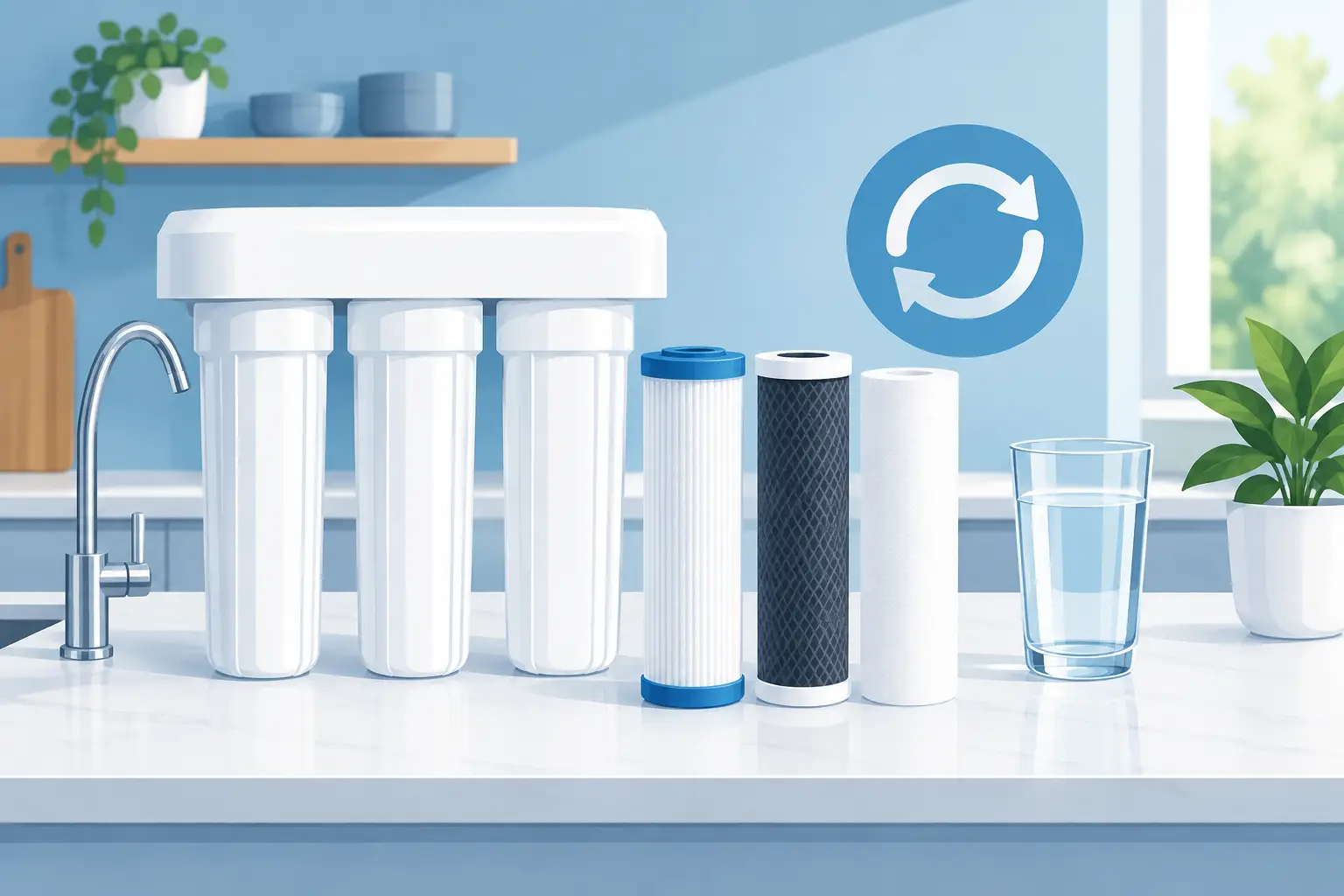
A glass of water can look perfectly clear while a tired filter quietly stops doing its best work. That is why knowing how often to replace water filters is less about waiting for an obvious problem and more about protecting the clean, polished everyday routine you want in your home.
The short answer is that most household water filters need replacement every two to six months. But the right schedule depends on the filter type, how much water your household uses, and the quality of the water coming into your home. A filter that serves a busy family kitchen will reach its limit far sooner than one used occasionally in a guest suite.
How Often to Replace Water Filters by Type
Your filter’s manual is the best starting point because each model has a rated capacity, usually measured in gallons. That rating is more useful than the calendar alone. Still, these common timelines make it easier to plan ahead.
Refrigerator water filters
Most refrigerator filters should be replaced about every six months, or after roughly 200 to 300 gallons. Many refrigerators display a replacement alert, but do not treat that light as the only signal. If your household fills bottles, makes coffee, cooks, and uses the dispenser throughout the day, you may reach the gallon limit before six months pass.
A fresh refrigerator filter can improve the taste and odor of drinking water and ice while helping the dispenser maintain a smooth flow. It is a small home upgrade with a noticeable effect on daily rituals.
Pitcher and countertop filters
Pitcher filters commonly last around two months or 40 gallons, although higher-capacity versions can last longer. Countertop filtration systems often use cartridges designed for two to six months of service.
These filters are convenient for apartments, dorms, and homes that want a refined drinking-water setup without changing plumbing. Their trade-off is capacity. Because the cartridge is compact, it can become saturated quickly in a high-use kitchen.
Faucet-mounted filters
Many faucet filters require a new cartridge every two to three months, often after 100 gallons. They are practical for everyday drinking and cooking water, but their smaller size means regular replacement is essential.
If the flow from a faucet-mounted filter slows down substantially, do not assume the faucet is the issue. A clogged cartridge is often the more likely explanation.
Under-sink and whole-house filters
Under-sink filters usually last six to 12 months, depending on the cartridge and household use. Whole-house sediment filters may need changing every three to six months, while larger carbon filters can last six months to a year.
These systems deserve a more tailored approach. Sediment-heavy water can block a filter surprisingly fast, while a home with relatively clean municipal water may get closer to the stated capacity. If you use a private well, regular water testing helps determine whether your replacement schedule needs to be more frequent.
Reverse osmosis systems
Reverse osmosis systems use several stages, so not every component changes at the same time. Pre-filters and post-filters are often replaced every six to 12 months. The RO membrane may last two to three years when the surrounding filters are maintained properly.
Skipping pre-filter changes can shorten the membrane’s life. It may feel economical to stretch cartridge use, but replacing the more affordable filters on schedule is usually kinder to the system and your long-term budget.
Signs Your Water Filter Needs Replacing Sooner
A replacement date is a useful guide, not a permission slip to ignore what is happening at the tap. Water conditions and usage can shift, especially after plumbing work, seasonal changes, or a move to a new home.
Watch for a slower flow, a return of chlorine taste or odor, cloudy water, unusual sediment, or a filter indicator that has changed color. Ice that tastes off can also point to a refrigerator filter that is past its prime. These signs do not automatically mean the water itself is unsafe, but they do suggest the filter may no longer be providing the performance you expect.
There is one exception worth taking seriously: do not rely on a household filter to solve an unknown water-quality concern. If water has a strong chemical smell, sudden discoloration, or a change you cannot explain, contact your local water provider or arrange appropriate testing. A cartridge replacement is excellent routine care, not a substitute for identifying a water supply issue.
What Changes the Replacement Schedule?
The simplest way to estimate filter life is to combine the manufacturer recommendation with your household habits. A one-person apartment that mainly uses filtered water for drinking may stay close to the stated timeline. A family that uses filtered water for bottles, soups, pets, and ice may need to replace the same cartridge much earlier.
Water quality matters just as much. Municipal water can contain chlorine and trace sediment that gradually fill a carbon filter. Homes with hard water, older pipes, or well water may place more strain on a cartridge. A sediment pre-filter can look visibly discolored long before its recommended replacement date, which is a helpful reminder that it is doing real work.
Filter claims matter, too. Some products are designed mainly to improve taste and reduce chlorine. Others are certified for particular contaminants. Choose a filter based on what it is designed to address, then follow its capacity guidance rather than expecting one product to handle every possible water concern.
A Simple System for Staying on Schedule
The easiest schedule is the one you will actually follow. Write the installation date on the cartridge or use a phone reminder set a week before the expected change date. If your filter tracks gallons, reset the indicator whenever you install a new one.
Keep a spare cartridge at home if your filter is part of your daily kitchen routine. This avoids the all-too-common moment when a replacement alert appears just before guests arrive or during a busy week. For refrigerator, pitcher, and faucet filters, storing one spare in a clean, dry cabinet is usually enough.
When replacing a filter, follow the product instructions for flushing the new cartridge. Many carbon filters need a few gallons of water run through them before use to clear harmless carbon fines and prepare the media. For refrigerator filters, discard the first batches of ice if the manual recommends it.
Do not forget the parts around the cartridge. Wipe the filter housing, pitcher reservoir, faucet mount, or refrigerator dispenser area according to the manufacturer’s care instructions. A clean setup supports better-tasting water and keeps an elegant kitchen essential looking as considered as the rest of your space.
Is It Bad to Use a Water Filter Past Its Date?
Using a filter slightly beyond its suggested date is not always an emergency, particularly if you have not reached its gallon capacity. But performance declines as the filter media fills. You may notice less improvement in taste, odor, or flow, and the cartridge may no longer reduce the substances it was intended to address at its rated level.
The bigger concern is making a habit of extending every replacement cycle. Filters are consumable components, not permanent fixtures. Their value comes from regular renewal, much like changing air filters or refreshing the essentials that keep a home feeling cared for.
A fresh water filter is a modest detail with an outsized influence on coffee, cooking, hydration, and hospitality. Set the reminder, keep the right replacement ready, and let every pour feel like a more considered part of home life.













Leave a comment