How to Organize Kitchen Drawers That Stay Tidy
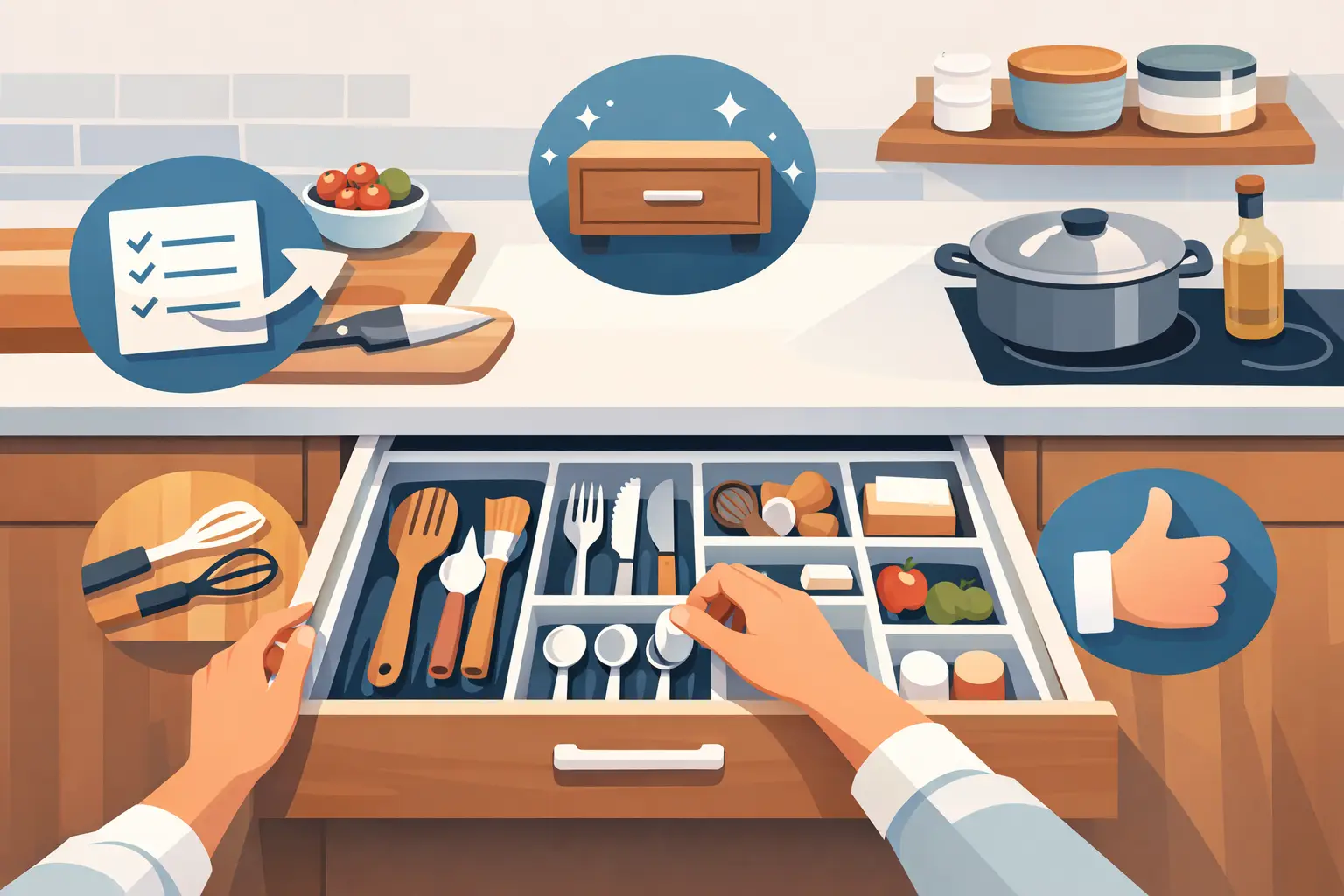
That one junked-up kitchen drawer usually starts with good intentions – a spatula here, a bag clip there, batteries somehow joining the party by Friday. If you are figuring out how to organize kitchen drawers, the goal is not perfection for one afternoon. It is creating a setup that looks polished, works fast, and still makes sense when real life gets busy.
A well-organized drawer does more than hide clutter. It speeds up meal prep, protects the tools you actually like using, and makes the whole kitchen feel more considered. When every item has a place, even a compact apartment kitchen can feel more elevated.
How to organize kitchen drawers without wasting space
The biggest mistake is organizing by drawer size instead of by use. A wide drawer does not automatically belong to utensils, and a shallow one is not always best for junk. The smarter approach is to think in zones based on your routines.
Stand where you actually cook and ask a simple question: what do you reach for here? Near the stove, you likely want cooking utensils, thermometers, and pot holders. Near the prep area, knives, peelers, measuring tools, and shears make more sense. Close to the dishwasher, everyday flatware and napkins may deserve the easiest access.
This matters because convenience is what keeps a system in place. If your drawer layout fights your habits, it will fall apart quickly no matter how attractive the inserts look.
Start with a full reset
Take everything out. Yes, everything. Drawers are small enough that partial organizing usually creates more shuffling than progress. Once the drawer is empty, wipe it down and notice what tends to collect there – crumbs, sticky residue, random twist ties, expired coupons. That buildup usually tells you the drawer has been holding too many unrelated things.
Sort items into broad categories on the counter. Keep similar tools together: cooking utensils, baking tools, knives, food storage accessories, linens, gadgets, and household extras. If you find five can openers or a dozen promotional pens in the kitchen, this is where restraint pays off. The best drawer organization often starts with owning less, not buying more.
Edit before you buy organizers
Drawer inserts can be beautifully useful, but they cannot solve overcrowding. Before adding trays or dividers, reduce duplicates and remove anything that belongs elsewhere. A meat thermometer you use weekly earns prime placement. A novelty avocado slicer you forgot existed probably does not.
Be honest about frequency. Daily-use items should be easiest to grab. Specialty tools can live in a less convenient drawer or a pantry bin. There is no prestige in giving front-row space to gadgets that only come out twice a year.
Create drawer zones that match real kitchen tasks
Once you have edited, assign each drawer a job. That single decision makes the rest much easier.
A utensil drawer is typically the most straightforward. Keep forks, knives, spoons, and serving pieces separated with a fitted tray. If you have a larger household, deeper compartments help prevent overflow. If space is tight, consider limiting the drawer to everyday flatware and storing occasional serving pieces elsewhere.
A cooking tools drawer should hold what you use at the stove: spatulas, wooden spoons, tongs, whisks, and ladles. Long tools usually fit best in a deep drawer with angled or expandable dividers. If the drawer is shallow, lay them side by side rather than stacking. Stacking looks harmless until you need one item and drag six out with it.
A prep drawer is ideal near your main counter workspace. Think measuring spoons, measuring cups, peelers, zesters, kitchen shears, and small graters. Grouping these tools together reduces that repetitive back-and-forth that makes cooking feel more chaotic than it needs to.
Then there is the drawer almost every home has – the catchall. If you truly need one, keep it tightly defined. It can hold bag clips, pens, matches, takeout menus, and small household odds and ends, but it needs boundaries. Small boxes or divided compartments keep it from becoming a landfill with a handle.
Give your best drawers to your best tools
Prime drawer real estate should go to the items that improve daily life. If you invested in quality utensils, sharp kitchen shears, or refined flatware, store them in a way that protects them and makes them easy to enjoy. This is where organization starts to feel less like maintenance and more like an upgrade.
A lined drawer interior adds a cleaner finish and helps prevent trays from shifting. Customizable dividers create a more tailored fit than one-size-fits-all inserts, especially in kitchens with unusual drawer dimensions. The most effective setup often looks simple, but it is thoughtful underneath.
The best organizers for kitchen drawers
Not every drawer needs a complicated system. The right organizer depends on the items, the drawer depth, and how often you open it.
Expandable utensil trays work well for flatware and smaller tools because they adapt to common drawer widths. Deep bins are better for bulky gadgets or linens. Narrow dividers help keep foil, parchment paper, and storage bags upright if you dedicate a drawer to wraps and food storage accessories.
For mixed-use drawers, modular inserts usually outperform one large tray. They let you create compartments around what you already own rather than forcing your tools into fixed sections. That flexibility is especially helpful if your collection changes over time.
There is also a visual consideration. Clean-lined bamboo, matte plastic, or clear acrylic each create a different feel. If your kitchen leans warm and classic, natural wood can look more elevated. If you want a lighter, more modern effect, clear organizers keep the drawer from feeling heavy. Function comes first, but appearance matters when you are trying to make everyday spaces feel more refined.
When vertical storage works better
Some drawers are deep enough to store items upright rather than flat. This works particularly well for reusable food containers, wrap boxes, and even spices if you use drawer inserts designed to angle labels upward. Vertical storage can save space, but only if the contents stay visible. If items disappear into a deep bin, you have traded clutter for frustration.
Small kitchen drawer organization ideas that actually help
Small kitchens need sharper decisions, not more complicated ones. If you are short on drawer space, avoid dedicating a full drawer to low-use items. Combine by task where it makes sense, such as storing prep tools and measuring pieces together.
Use shallow top drawers for essentials and deeper lower drawers for awkward tools, kitchen towels, or lunch containers. If your silverware drawer is cramped, remove extra serving utensils and relocate backup flatware. You do not need your entire inventory within immediate reach.
This is also where multi-use products earn their place. A compact divider that adjusts as your needs change is often smarter than buying several rigid organizers. At Arvenas, that mix of polished design and everyday practicality is exactly what makes home upgrades feel worthwhile rather than excessive.
Keep the system from slipping back
Knowing how to organize kitchen drawers is one thing. Keeping them organized is where most people get tripped up. The fix is not a stricter routine. It is making reset moments almost effortless.
Leave a little empty space in each drawer. Packed drawers get messy faster because there is no room to return things neatly. Aim for a layout that feels comfortably full, not crammed.
Do a two-minute reset once or twice a week. Put loose items back in their sections, throw out trash, and relocate anything that wandered in from another room. That tiny habit prevents the need for a full reorganization every month.
It also helps to set a rule for incoming clutter. If a new gadget comes in, decide immediately where it lives. If there is no clear home, that is usually a sign you do not need it in the kitchen at all.
A note on family kitchens
If multiple people use the space, labels can help at first, especially for kids or shared households. But the better long-term solution is intuitive placement. Put snack tools where lunch gets packed. Keep cooking utensils beside the stove. Store everyday dishes and flatware where unloading the dishwasher feels automatic. The less explaining a system requires, the better it tends to hold.
Beautiful drawer organization is not about making your kitchen look untouched. It is about removing friction from the moments you repeat every day. When your tools are easy to find, easy to put away, and stored with a little more intention, the whole room works harder for you – and feels better every time you open a drawer.
Start with one drawer, make it genuinely useful, and let that standard shape the rest of the kitchen.












Leave a comment