Ceramic vs Stainless Cookware for Your Kitchen
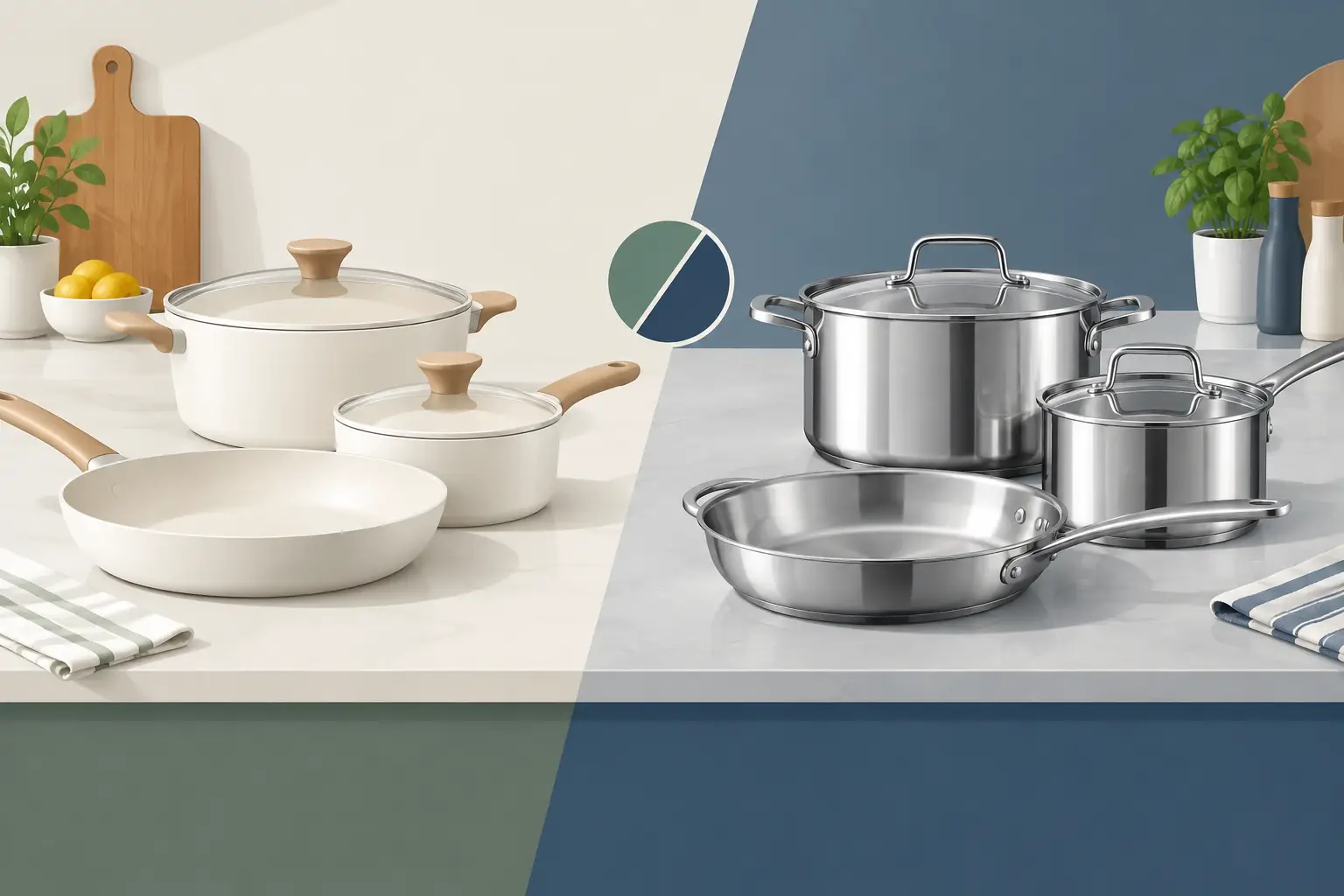
That pan that looked pristine at checkout can become the most-used piece in your kitchen – or the one pushed to the back of the cabinet. The ceramic vs stainless cookware decision is less about choosing a universal winner and more about choosing the finish, heat control, and upkeep that suit the way you actually cook. For a polished everyday kitchen, both can earn a place on the stovetop.
Ceramic cookware offers the easy release many home cooks want for eggs, pancakes, delicate fish, and quick weeknight vegetables. Stainless steel brings the control, resilience, and restaurant-inspired browning that make a simple chicken breast or pan sauce feel more special. Knowing where each material shines helps you invest in cookware that looks refined and performs beautifully meal after meal.
Ceramic vs Stainless Cookware at a Glance
Most ceramic cookware sold today is metal cookware, often aluminum, finished with a ceramic-based nonstick coating. It heats quickly, tends to be lighter in the hand, and provides a naturally slick cooking surface without the traditional PTFE-style nonstick finish. Solid ceramic vessels exist, but ceramic-coated pans are what most shoppers mean when they compare ceramic and stainless cookware.
Stainless steel cookware is typically made from layers of stainless steel surrounding an aluminum or copper core. That inner core improves heat distribution, while the steel exterior provides durability and a sleek, enduring appearance. Quality stainless pans are not naturally nonstick, but with the right preheat and a little oil, they can release food remarkably well.
| Feature | Ceramic cookware | Stainless steel cookware | | — | — | — | | Best for | Delicate, low-stick foods | Searing, sauteing, sauces, and high-heat cooking | | Heating | Fast and responsive | Even in quality multi-layer construction | | Care | Gentle utensils and lower heat | More forgiving, often dishwasher safe | | Longevity | Coating gradually wears over time | Can last for decades | | Weight | Often lighter | Usually heavier and more substantial |
Choose Ceramic for Effortless Everyday Cooking
Ceramic-coated cookware feels especially appealing when breakfast is a daily ritual or when a fast dinner should not end with a pan soaking in the sink. A properly cared-for ceramic skillet needs little oil, making it convenient for soft scrambled eggs, quesadillas, crepes, flaky fish, and vegetables that you want to keep intact.
Its smooth, often color-forward finish also suits a design-conscious kitchen. Ceramic cookware can bring a softer, more decorative touch to open shelving or a stovetop that stays in view. For apartment kitchens, casual cooks, and anyone building a beautiful first cookware collection, that combination of accessibility and visual appeal is hard to ignore.
There is a trade-off. Ceramic nonstick coatings perform best over low to medium heat. Consistently using high heat, metal utensils, aerosol cooking sprays, or abrasive scrubbers can shorten their useful life. Even premium ceramic-coated pans are not forever pieces in the way a quality stainless steel skillet can be. Expect the release to slowly diminish after regular use, particularly if the pan is overheated.
That does not make ceramic a lesser choice. It makes it a specialized one. If your priority is easy cleanup and relaxed cooking, ceramic can make everyday meals feel distinctly more effortless. Treat it with care, use silicone or wooden utensils, and let the pan cool before washing it.
What ceramic does especially well
Ceramic is at its best when the food is delicate and the cooking process is gentle. It is excellent for reheating leftovers, warming tortillas, cooking a simple omelet, or preparing a quick sauté with minimal oil. It is less ideal for a hard restaurant-style sear on steak or for recipes that begin with aggressively high heat.
Choose Stainless Steel for Versatility That Lasts
Stainless steel rewards a little technique with exceptional versatility. It is the cookware to reach for when you want deeply browned mushrooms, crisp-skinned salmon, seared pork chops, or a pan sauce built from the flavorful browned bits left behind after cooking. Those bits, known as fond, are not a cleanup problem. Deglaze the pan with wine, stock, citrus, or even water, and they become the foundation of a richer sauce.
A well-made stainless steel pan is also an investment in longevity. It resists scratches, handles metal utensils, and tolerates heat that would damage a ceramic coating. Many pieces can move from stovetop to oven, which is ideal for finishing a frittata, roasting a thick cut of meat, or keeping a dish warm for guests.
The learning curve is real, but modest. Preheat the pan over medium heat, add oil once the surface is hot, then give food room to cook before trying to move it. Protein often sticks at first and releases naturally once a crust has formed. Crowding the pan or flipping food too early is usually the issue, not the cookware itself.
Stainless steel also asks for a little more cleanup after sticky foods or high-heat cooking. Most residue lifts with warm water, dish soap, and a nonabrasive scrubber. For stubborn discoloration, a stainless-safe cleaner or a paste of baking soda and water can restore the shine. That maintenance is usually worthwhile for a pan that can remain in your kitchen for years.
What stainless steel does especially well
Choose stainless when flavor development matters. It excels at searing, braising, boiling pasta, reducing sauces, and cooking acidic ingredients such as tomato, lemon, or wine. Unlike bare cast iron, stainless steel does not require seasoning, and unlike ceramic nonstick, it is built to handle frequent high-heat use.
Heat, Safety, and the Details That Matter
For ceramic cookware, the key is protection. Avoid preheating an empty pan for long periods, since rapid overheating can damage the coating. Use a small amount of butter, oil, or another cooking fat rather than aerosol sprays, which may leave residue that affects performance. Hand washing is the safest choice, even when a manufacturer labels a piece dishwasher safe.
For stainless steel, look beyond a shiny exterior. Multi-layer or clad construction generally produces more even heating than a thin, single-layer steel pan. A bonded aluminum or copper core helps prevent hot spots, so onions soften evenly and sauces are less likely to scorch in one area. A substantial handle and a flat, stable base also make a meaningful difference in daily use.
Neither material is automatically right for every burner. Confirm that a piece is compatible with your cooktop, especially if you use induction. Many stainless steel sets work on induction because steel is magnetic, while ceramic-coated cookware depends on the metal beneath its coating. If induction is part of your kitchen, check the product specifications before choosing a favorite finish or color.
The Smartest Kitchen Usually Has Both
If you are outfitting a kitchen from scratch, the most practical answer is often not ceramic or stainless steel. It is one excellent ceramic skillet paired with a versatile stainless steel skillet and saucepan. The ceramic pan covers easy breakfasts and delicate foods; the stainless pieces handle searing, sauces, oven finishing, and the dishes you make when you want to cook with more confidence.
Start with the foods you prepare most often. A household that makes eggs every morning may value ceramic’s easy release more than anything else. A home cook who loves crisp vegetables, pasta sauces, and steak night will likely get more mileage from stainless steel. If storage is limited, choose the material that matches your habits rather than buying a large set that leaves half its pieces untouched.
Cookware should support the rhythm of your home, from a quiet weekday breakfast to a dinner worth setting the table for. Select pieces with a finish you enjoy seeing, a weight you are comfortable lifting, and performance that fits your favorite recipes. A thoughtfully curated choice from Arvenas can make the everyday act of cooking feel a little more elevated – without making it more complicated.












Leave a comment