Air Purifier vs Humidifier for Your Home
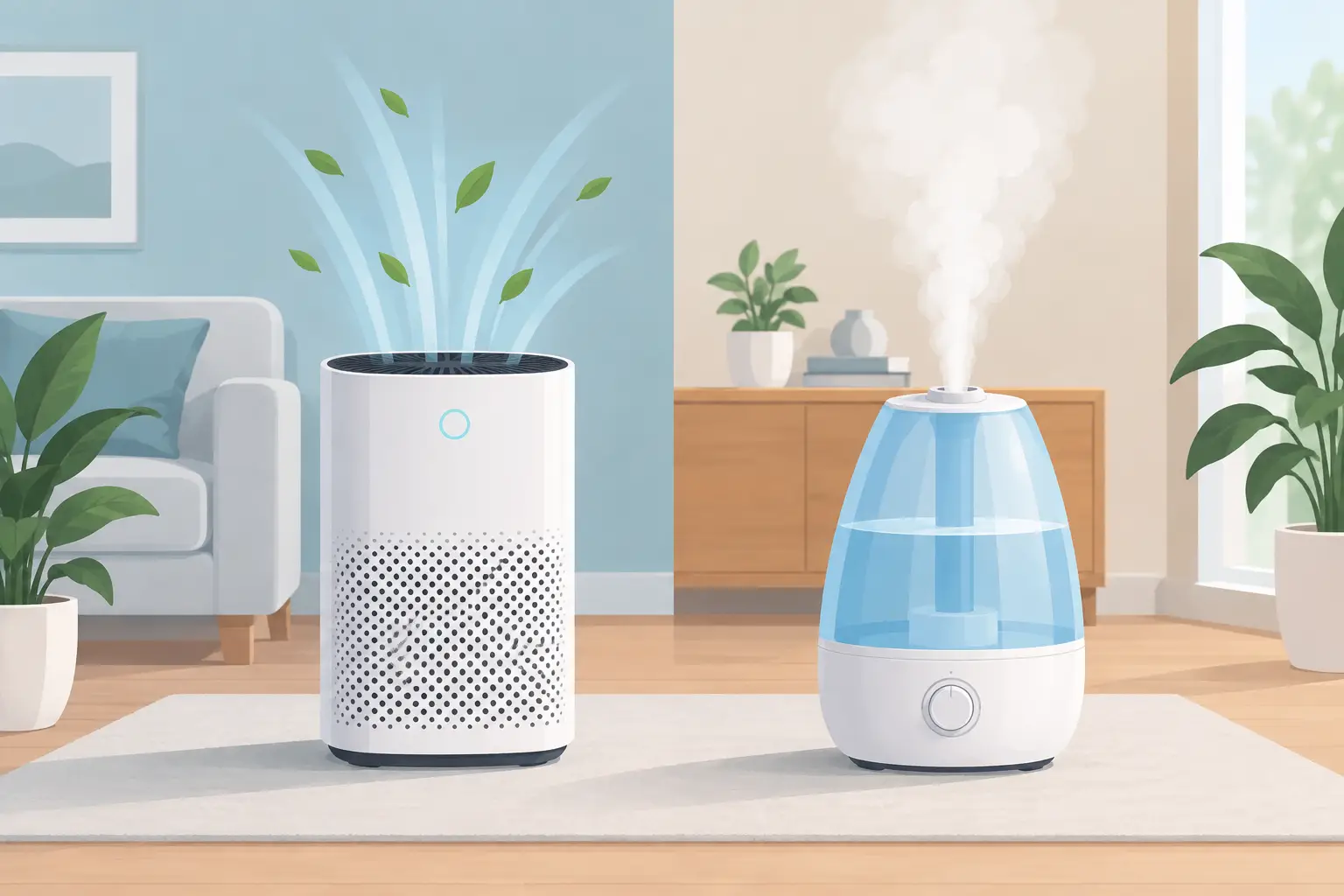
A dry throat at 3 a.m., a layer of pet hair on the sofa, lingering cooking smells, or a stuffy bedroom can all make home feel less restorative. The air purifier vs humidifier decision becomes simple once you identify what is actually bothering you: particles in the air, a lack of moisture, or a little of both. These two appliances can make a meaningful difference in everyday comfort, but they solve very different problems.
A thoughtfully chosen air-care upgrade can make a bedroom feel calmer, a living room feel fresher, and a home office more comfortable through long workdays. The refined choice is not always the biggest machine or the one with the longest feature list. It is the one designed for your room, your household, and the season.
Air Purifier vs Humidifier: The Core Difference
An air purifier cleans the air by pulling it through filters that capture airborne particles. Depending on the filter system, it can reduce dust, pollen, pet dander, smoke particles, and other fine debris that may otherwise circulate through your space. Some models also use an activated-carbon filter to help reduce odors from cooking, pets, or everyday living.
A humidifier does not clean the air. It adds water vapor to raise humidity when indoor air is too dry. Heating systems, cold-weather conditions, and air conditioning can leave a room feeling parched, which may contribute to dry skin, irritated nasal passages, static electricity, and a scratchy feeling in the throat.
Think of an air purifier as a filter for what is floating around your room. Think of a humidifier as a comfort tool for the moisture level of that room. One removes particles; the other adds humidity. Neither is a substitute for regular cleaning, ventilation, or addressing a source problem such as a leak, smoke, or mold.
When an Air Purifier Is the Better Choice
Choose an air purifier when airborne particles, allergens, or odors are the main concern. It is often a smart addition for homes with pets, busy entryways, upholstered furniture, open kitchens, or bedrooms where seasonal allergies seem to follow you indoors.
For allergy-aware households, a purifier with a true HEPA filter is often the feature worth prioritizing. HEPA filtration is designed to capture very small particles, including pollen, dust mites, and pet dander. If odors are also part of the issue, look for an added activated-carbon layer. Carbon is especially useful in apartments, pet areas, kitchens, and rooms exposed to outdoor smoke or traffic-related odors.
Room coverage matters as much as filtration. A compact desktop purifier may be ideal near a workspace or bedside table, but it will not perform like a larger unit in an open-concept living area. Check the recommended room size and, when available, the clean air delivery rate. A higher CADR generally indicates that the unit can clean a larger volume of air more quickly for the particle type tested.
Purifiers also have practical trade-offs. Filters need replacing, and replacement costs should be part of the purchase decision. A powerful setting can create noticeable sound, although many models offer a sleep mode for quieter nighttime use. For the best results, keep doors and windows reasonably closed while it runs and place the unit where airflow is not blocked by curtains, furniture, or a corner.
When a Humidifier Makes More Sense
A humidifier earns its place when the air feels dry rather than dirty. You may notice it most during winter, when indoor heating can strip moisture from the air, or in arid climates where dry conditions are part of daily life. A well-maintained humidifier can help a bedroom feel more comfortable overnight and can reduce that tight, dry sensation in your skin and sinuses.
The ideal indoor humidity range is generally around 30% to 50%. Below that range, dry-air discomfort becomes more likely. Above it, excess moisture can encourage mold growth and dust mites, which can create a different set of air-quality concerns. A small hygrometer takes the guesswork out of the decision and is one of the most useful, low-effort tools for creating a more comfortable home.
There are several humidifier styles, and the best one depends on your preferences. Cool-mist humidifiers are popular for bedrooms and family spaces because they release a comfortable mist without heating water. Warm-mist units can feel especially pleasant in colder months, though they use more energy and involve hot water. Ultrasonic designs are often quiet and design-forward, while evaporative models use a fan and wick to release moisture more gradually.
Maintenance is the non-negotiable part of humidifier ownership. Empty and refill the tank with fresh water daily, clean the unit according to its instructions, and never let water sit for long periods. If your tap water is mineral-heavy, distilled water can help reduce white dust on nearby surfaces, particularly with ultrasonic models. A humidifier should make a space feel fresher, not introduce stale water or excess moisture into it.
Can You Use Both in the Same Room?
Yes. In many homes, using both is the most polished solution. An air purifier can reduce particles and odors while a humidifier keeps dry indoor air within a more comfortable range. This pairing can be particularly helpful in a pet-friendly bedroom, a nursery, or a winter living room where the heat runs often.
The key is to give each device room to work. Place them several feet apart rather than directing humidifier mist toward the purifier’s intake. Keep the humidifier on a stable, water-safe surface, and avoid placing either appliance directly against a wall. Monitor humidity with a hygrometer instead of running a humidifier continuously out of habit.
If someone in your home has asthma, significant allergies, recurring respiratory symptoms, or immune-related health concerns, product choices deserve more care. An air purifier or humidifier may support a more comfortable environment, but it should not replace guidance from a qualified healthcare professional.
How to Choose the Right Model for Your Space
Start with the room, not the product trend. Measure the approximate square footage, consider ceiling height, and think about how the space is used. A closed bedroom has very different needs from a sunlit living room connected to a kitchen and hallway.
For an air purifier, focus on room coverage, filter type, noise level, energy use, and the long-term cost of replacement filters. A washable pre-filter is a useful touch for homes with pets because it catches larger debris before it reaches the main filter. Smart controls and air-quality sensors can add convenience, but they should not distract from the essentials: effective filtration and an appropriate size.
For a humidifier, consider tank capacity, run time, refill convenience, noise, and cleaning access. A beautiful unit with a narrow tank opening may be frustrating if it is difficult to scrub. For bedrooms, a quiet design with a built-in humidistat can help maintain a consistent setting without over-humidifying the space.
Style still matters. Air-care appliances are often visible, especially in carefully furnished rooms. Look for a finish and footprint that complements your décor, whether your home leans warm and classic, modern and minimal, or comfortably eclectic. At Arvenas, the best home upgrades pair practical performance with a design that belongs in the room.
A Better Indoor-Air Routine Starts Small
An air purifier is the stronger choice for dust, dander, pollen, smoke particles, and everyday odors. A humidifier is the better fit for dry air and the discomfort that follows it. If your home has both concerns, use each with intention and maintain them well.
Begin with the room where you rest most. Set up the right appliance, check the humidity after a few days, and notice how the space feels when you wake up, work, or settle in for the evening. Comfort is often built through these quiet details – cleaner air, balanced moisture, and a home that feels considered from the moment you walk in.










Leave a comment