Smartwatch vs Fitness Tracker: Which Fits You?
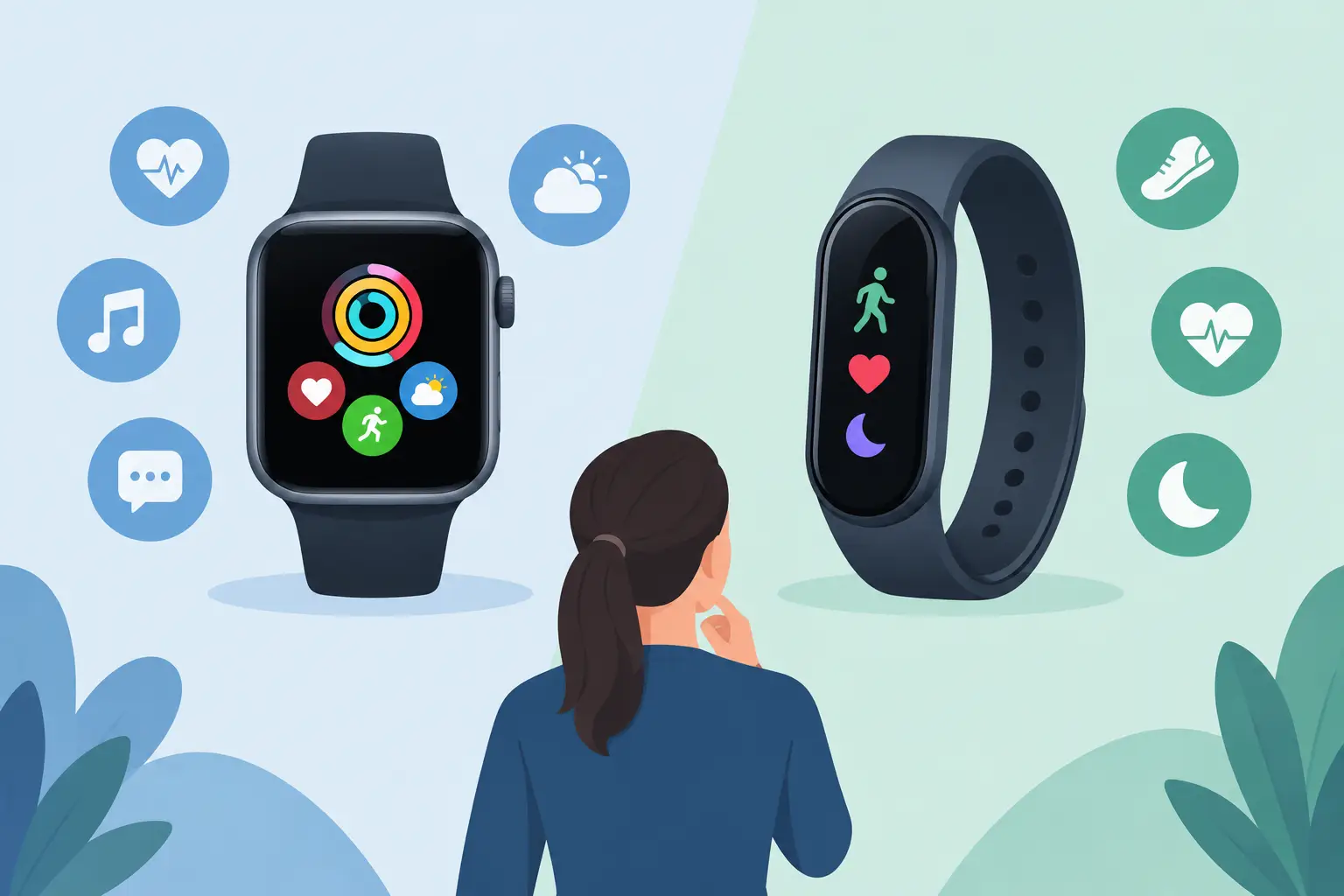
Your wrist has limited real estate, and the right wearable should earn its place there. The smartwatch vs fitness tracker decision is not simply about choosing more features or spending less. It is about selecting a piece of everyday technology that feels natural from a morning walk to a full workday, a gym session, and a night of sleep.
For some shoppers, a watch that handles messages, calls, music, payments, and wellness data is a refined convenience they will use constantly. For others, a lighter device with longer battery life and focused health insights is the smarter fit. The best choice depends on how you move, how connected you want to be, and whether you prefer an accessory that blends quietly into your routine or takes center stage.
Smartwatch vs Fitness Tracker: The Core Difference
A smartwatch is designed as an extension of your phone. Along with activity and health tracking, it typically offers a display built for notifications, apps, voice assistants, contactless payments, music controls, navigation prompts, and customizable watch faces. Many models also support calling or texting directly from your wrist when paired with a phone, and some offer cellular connectivity for greater independence.
A fitness tracker has a narrower, more focused job: measuring movement, workouts, recovery, sleep, and other wellness signals. It generally prioritizes a slim profile, straightforward data, and battery life that can stretch for days or even weeks. Its smaller screen may show the essentials, but it is not intended to replace the convenience of your phone.
Neither approach is automatically better. A smartwatch brings broad capability and a more polished, watch-like presence. A fitness tracker offers quiet consistency for people who want useful health data without another screen demanding attention.
Choose a Smartwatch if Your Day Runs Through Your Phone
A smartwatch makes sense when convenience is the main attraction. If you regularly check messages between meetings, change playlists while cooking, use digital payments on errands, or want turn-by-turn prompts while walking in an unfamiliar neighborhood, those small wrist-level actions add up.
The larger display is a major advantage. Workout stats are easier to read mid-session, maps are more practical, and watch faces can shift from understated and professional to sport-focused with a few taps. For shoppers who view accessories as part of their personal style, a smartwatch can also feel more substantial and versatile. Interchangeable bands and customizable faces let one device move comfortably between the office, the gym, and dinner plans.
Smartwatches are often the stronger option for runners and cyclists who want live pace, route guidance, music access, and safety features without holding a phone. They can also suit busy parents, commuters, and professionals who want to stay reachable without pulling out their phone every few minutes.
The trade-off is charging. Depending on the model and how heavily you use GPS, calls, or a bright always-on display, a smartwatch may need power every day or every other day. If you are already disciplined about charging your phone overnight, that may be a nonissue. If you tend to forget cables before a weekend trip, it can become a frustrating gap in an otherwise elevated routine.
Choose a Fitness Tracker if Health Insights Come First
A fitness tracker is ideal for people who want their wearable to feel nearly invisible. The slimmer shape is usually more comfortable for sleeping, and that matters because sleep trends are among the most useful long-term wellness metrics. Consistently wearing a device overnight can reveal patterns in sleep duration, restlessness, resting heart rate, and recovery that a once-a-week workout log simply cannot show.
Battery life is another compelling reason to choose a tracker. A device that lasts several days reduces the chances that you will miss steps, workouts, or sleep data while it sits on a charger. It is a practical benefit with a premium feel: the product works in the background, without asking for much in return.
Fitness trackers are especially appealing if your goals are clear and measurable. Maybe you want to build a walking habit, monitor daily activity after a long stretch at a desk, improve sleep consistency, or stay accountable during a new training plan. You may not need a wrist-based inbox to do any of that. A focused tracker can provide reminders, trends, and motivational milestones while keeping interruptions to a minimum.
Do not mistake simplicity for limitation. Many modern trackers include heart-rate monitoring, workout modes, stress or recovery indicators, menstrual cycle tracking, blood oxygen estimates, GPS through a connected phone, and water resistance for swimming. The question is not whether a tracker can collect enough data. It is whether you need that data displayed on a larger screen alongside a long list of smart features.
Features Worth Comparing Before You Buy
The product page can make every metric sound essential, so it helps to focus on what will matter after the first exciting week. Start with the health functions you will genuinely use. Basic step and calorie tracking are common, but more advanced training insights, ECG readings, irregular heart rhythm notifications, or detailed sleep analysis may vary by device and region. These tools can support awareness, but they are not a substitute for medical advice or professional care.
GPS is another meaningful distinction. Built-in GPS lets you record outdoor routes without carrying your phone, which is valuable for runners, hikers, cyclists, and anyone who prefers a lighter pocket. Connected GPS uses your phone’s location instead. It can still work well for neighborhood walks and casual workouts, but it is less independent.
Comfort deserves as much attention as the feature list. A large smartwatch may look striking and offer a generous display, yet it can feel bulky during sleep or strength training. A narrow tracker may disappear under a sleeve and wear beautifully overnight, but its screen may be less satisfying for reading notifications. Consider your wrist size, preferred band material, and the settings where you will wear it most.
Also look closely at the ecosystem. A wearable is easier to enjoy when it works smoothly with your phone, preferred music service, workout apps, and payment method. Some watches offer their best experience within a specific phone family, while many trackers provide broader compatibility. Buying the most feature-packed device is less rewarding if its strongest functions do not fit the technology you already use.
Battery, Notifications, and Attention
There is a personal trade-off hidden inside every wearable purchase: how much information do you want your wrist to deliver?
A smartwatch can reduce phone pickups by filtering what reaches you. Set up thoughtfully, it can show only calls from favorites, calendar alerts, delivery updates, and essential messages. Set up carelessly, it can turn every app alert into a vibration that breaks your focus. The difference is not the device itself but the boundaries you create.
Fitness trackers tend to make those boundaries easier. Their simpler displays encourage a glance-and-go relationship with your data. You can check your progress, start a workout, or see the time without slipping into a stream of notifications. For many people, that calmer experience is exactly the point.
Battery expectations often follow the same pattern. More screen time, apps, GPS, and cellular functions consume more power. Longer-lasting trackers trade some of those conveniences for freedom from daily charging. Think about your real habits, not your ideal ones. A device that is slightly less advanced but stays on your wrist is more useful than a premium watch left charging on the dresser.
Style Matters More Than It Seems
Wearables are health tools, but they are also accessories you may wear more than any other item you own. A design that suits your wardrobe and feels appropriate at work is more likely to become a lasting part of your day.
Smartwatches typically offer a broader range of cases, band styles, and digital faces, making them easier to dress up or personalize. They can complement a clean professional look with a leather-inspired band, then shift into active mode with a soft sport band. Fitness trackers lean more minimal and athletic, which can be perfect for casual wardrobes, travel, and all-day comfort.
For gifting, consider the recipient’s lifestyle before choosing the more expensive option. The person who loves gadgets, travel, and staying connected may appreciate a smartwatch’s versatility. The person focused on wellness, walking goals, sleep, or low-maintenance routines may value a sleek tracker far more.
Make the Choice That You Will Actually Wear
Choose a smartwatch when you want a capable companion for communication, navigation, payments, music, and active life management. Choose a fitness tracker when you want reliable wellness data, extended battery life, lighter comfort, and fewer digital interruptions. If you are torn, let sleep comfort and charging tolerance guide you. They shape daily satisfaction more than a long list of features.
The most rewarding wearable is not the one with the flashiest specification sheet. It is the one that makes your routine feel a little more informed, organized, and intentional each time you put it on.













Leave a comment