Portable Blender Review: What’s Worth Buying?
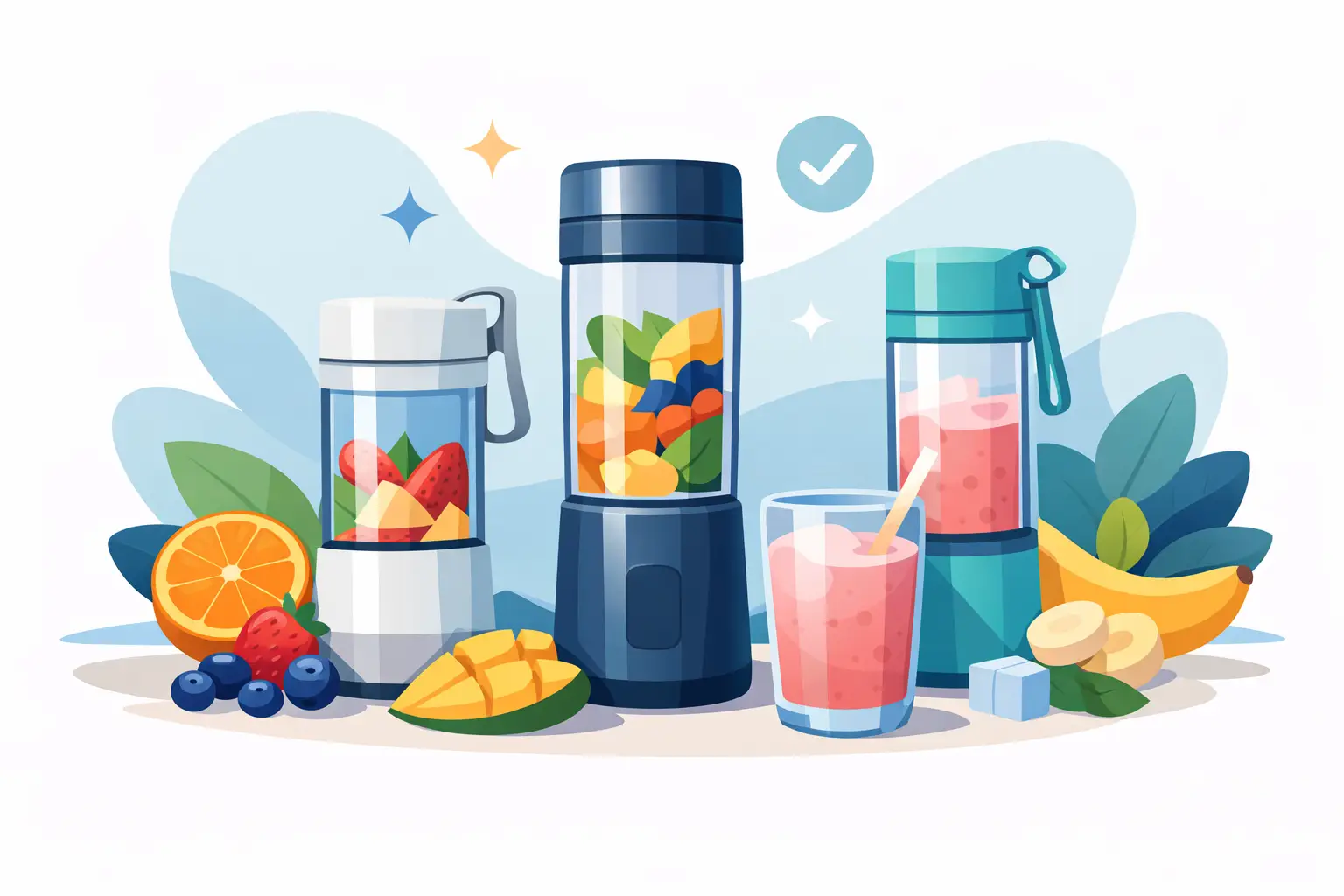
A rushed morning rarely leaves room for hauling out a full-size blender, washing a heavy pitcher, and finding counter space for another appliance. That is where a portable blender earns its place. This portable blender review looks beyond the appealing promise of smoothies anywhere and focuses on what makes a compact blender genuinely useful: enough power for your ingredients, a practical cup size, dependable charging, and cleanup that does not become another chore.
For apartment kitchens, office desks, post-workout routines, road trips, and thoughtful wellness gifting, the best portable blender is not necessarily the smallest or the most heavily advertised. It is the one that fits the way you actually drink your blends.
Portable Blender Review: What to Expect
A portable blender is a rechargeable personal blender with a blending cup built around its motor base. Most are designed for single servings of smoothies, protein shakes, soft fruit drinks, baby food, and light sauces. Their appeal is clear: they remove the need to transfer a drink from blender jar to travel cup, and their cordless design makes them easy to use away from the kitchen.
The trade-off is power. A portable model will not replace a countertop blender for frozen cocktail batches, nut butter, thick hummus, or ice-heavy drinks for a family. Even a premium-looking compact unit has a smaller motor and battery than a plug-in appliance. Buying with that expectation in mind is the difference between a convenient daily essential and a gadget that ends up in a cabinet.
The strongest category picks balance elegant, travel-friendly design with realistic performance. Look for a cup that feels substantial in hand, a lid that seals securely, and controls simple enough to use when you are halfway out the door.
Start With What You Plan to Blend
Your usual ingredients should guide the purchase more than any headline feature. If your standard blend is banana, berries, yogurt, milk, and protein powder, a well-made portable blender can handle it beautifully. Soft fruit and liquids are exactly what these models do best.
Frozen fruit changes the equation. Small pieces of partially thawed mango, strawberries, or pineapple are often manageable when paired with enough liquid. Large frozen chunks can stall the blades, drain the battery, or leave an uneven texture. Ice is similar. A few small cubes may work in a capable unit, but a cup packed with ice is a demand better suited to a countertop blender.
Leafy greens deserve an honest mention, too. Baby spinach usually blends into a smoothie without much resistance. Fibrous kale stems and celery strings are less forgiving. If green drinks are your everyday ritual, prioritize a portable blender with a higher blade count, a stronger motor specification, and reviews that specifically mention greens rather than relying on attractive product photography.
Power Matters More Than Speed Claims
Many portable blenders highlight blade speed, but revolutions per minute alone do not tell the whole story. Blade shape, motor torque, battery condition, ingredient order, and available liquid all influence the final result. A unit can sound fast and still struggle if it cannot maintain force through thicker ingredients.
Rather than shopping by one impressive number, pay attention to the complete build. Stainless steel blades are a sensible baseline. A sturdy motor housing helps the blender feel less flimsy during use, while a secure blade assembly reduces leaks and makes cleanup safer. For shoppers who want a polished piece of everyday tech rather than a disposable novelty, these details matter.
Ingredient order also has a surprisingly large impact. Add liquid first, then powders or yogurt, followed by soft fruit. Place frozen ingredients on top in smaller portions. This gives the blades room to move and prevents the dense layer at the bottom that causes many blending failures.
Capacity: Personal Convenience Has Limits
Portable blender cups commonly hold enough for one modest smoothie or shake. That is ideal for a quick breakfast, an afternoon refresh, or a post-gym drink. It is less ideal for two people sharing, meal-prep batches, or large servings loaded with oats, fruit, greens, and ice.
A larger cup can sound like the obvious upgrade, but it is worth considering the weight when full. A compact blender should be comfortable to carry in a tote, keep at the office, or pack for a weekend away. An oversized model may offer more volume while losing the grab-and-go advantage that made the category appealing in the first place.
If you prefer a truly filling smoothie, look for a capacity that leaves room below the maximum fill line. Overfilling is one of the fastest ways to create leaks, poor circulation, and a disappointing blend. A slightly smaller drink blended smoothly is better than a packed cup that leaves fruit chunks behind.
Battery Life and Charging in Real Life
Battery claims can be optimistic because they are usually based on short blend cycles with easy ingredients. In everyday use, frozen fruit, thicker liquids, and repeated cycles will reduce the number of blends per charge. Treat advertised battery life as a useful comparison point, not a guarantee.
USB charging is especially practical because it works with a wall adapter, laptop, power bank, or car charging setup. A clear battery indicator is more valuable than it seems. It saves you from discovering a low charge just as you have added ingredients.
For regular travel or office use, charging convenience may matter more than maximum battery capacity. A portable blender that recharges easily and reliably fits into a busy routine. One that requires a specialized cable or has no visible charge status can quickly become inconvenient.
Cleanup Is the Feature You Will Notice Most
A portable blender should make healthy drinks easier, not add a sticky cleanup task to your day. The simplest cleaning method is usually immediate: add warm water, a small drop of dish soap, and run a short cycle. Rinse the cup, lid, and blade area carefully afterward.
Avoid letting protein powder, nut butter, or fruit pulp dry inside the cup. Those ingredients can collect around seals and beneath the blade assembly, where odors and residue become harder to remove. A removable gasket is helpful, provided it is easy to place back correctly. If it is loose or difficult to clean, it can become a source of leaks.
Dishwasher-safe parts are a welcome bonus, but check whether that includes the motor base. It usually does not. The electronic base should be wiped with a damp cloth only and never submerged. A little care protects both the charging port and the finish.
Style, Safety, and the Details That Add Value
For a product that often sits on a desk, kitchen shelf, or gym bag, design is more than an extra. A refined finish, clean silhouette, and well-made lid can make a portable blender feel like a considered lifestyle piece instead of another plastic accessory. It also makes the category an easy gift for students, wellness-minded friends, new homeowners, and busy parents.
Safety features deserve equal attention. Look for a blender that will not run unless the cup is properly attached and the lid is secure. A stable base reduces wobbling on counters, while a leak-resistant drinking lid protects bags and car interiors. These are quiet details, but they are the ones that create confidence in daily use.
At Arvenas, practical upgrades are most appealing when they also bring a sense of polish to the routine. A portable blender fits that idea well: compact enough for real life, attractive enough to leave within reach, and useful enough to earn its space.
Who Should Buy a Portable Blender?
A portable blender is a strong choice for someone who makes one drink at a time and values convenience over maximum power. It is especially useful for protein shakes that benefit from a quick re-blend, simple fruit smoothies at work, and travel days when a full kitchen is not available.
It may not be the right primary blender for households that regularly make multiple servings, use hard vegetables, crush plenty of ice, or prepare thick recipes. In that case, a countertop model does the heavy lifting, while a portable blender works best as a stylish secondary appliance for individual drinks.
The most satisfying purchase comes from matching the blender to your routine, not asking it to do every kitchen job. Choose one with enough capacity for your favorite drink, a charging method that suits your day, and a design you will be happy to reach for. Then keep your ingredients simple, your portions sensible, and your smoothie habit delightfully easy to maintain.













Leave a comment